With the development of agriculture, the types of fertilizers have become more numerous and the classifications more detailed. This has led many farmers to wonder: What is controlled-release fertilizer? What is slow-release fertilizer? What are the differences between controlled-release and slow-release fertilizers?
I. What is Controlled-Release Fertilizer?
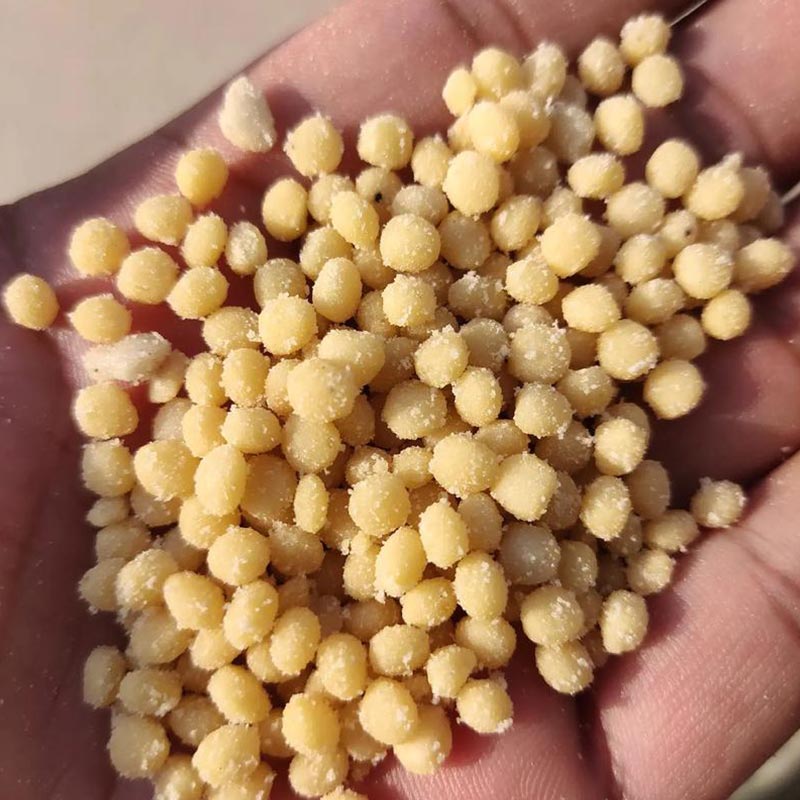
Controlled-release fertilizers extend the decomposition and release time of nutrients through methods such as coating, encapsulation, and the addition of inhibitors. This helps improve the utilization rate of fertilizer nutrients, thereby extending the fertilizer's effectiveness and promoting increased agricultural production. It is one of the fertilizers promoted by the Ministry of Agriculture. Common controlled-release fertilizers are broadly divided into: sulfur-coated (fertilizer-coated), resin-coated, and urea enzyme inhibitors. Based on different production processes, they can be further divided into: compound type, mixed type, and blended type.
"Release" refers to the process by which nutrients are transformed from chemical substances into effective forms that plants can directly absorb and utilize (such as dissolution, hydrolysis, and degradation); "slow-release" means that the nutrient release rate of the chemical substance is far less than the release rate of readily soluble fertilizers after application to the soil. Therefore, organic nitrogen compounds (such as urea-formaldehyde UFs) that can be decomposed under biological or chemical action are usually called slow-release fertilizers.
III. Differences Between Controlled-Release and Slow-Release Fertilizers
Both slow-release and controlled-release fertilizers have slow nutrient release rates and long-lasting effects. In this sense, there is no strict distinction between them. However, in terms of the mechanism and effectiveness of controlling nutrient release rates, there are differences between slow-release and controlled-release fertilizers. Slow-release fertilizers slow down the nutrient release rate through chemical and biological factors, and the release is affected by many external factors such as soil pH, microbial activity, soil moisture content, soil type, and irrigation water volume; while controlled-release fertilizers use an outer coating to encapsulate water-soluble fertilizers, allowing for slow nutrient release. When the coated fertilizer particles come into contact with moist soil, the water in the soil penetrates through the coating, causing some of the fertilizer to dissolve. This dissolved water-soluble nutrient then slowly and continuously diffuses outward through the micropores in the coating. The higher the soil temperature, the faster the dissolution rate of the fertilizer and the faster it passes through the membrane; the thinner the membrane, the faster the penetration.
From the perspective of nutrient composition, there are also differences between the two. Slow-release fertilizers are mostly single-nutrient fertilizers, primarily slow-release nitrogen fertilizers, also known as long-acting nitrogen fertilizers, which have very low solubility in water. After being applied to the soil, the fertilizer gradually decomposes under the action of chemical and biological factors, and the nitrogen is slowly released, meeting the crop's nitrogen needs throughout its entire growth period. Controlled-release fertilizers, on the other hand, are mostly N-P-K compound fertilizers or complete nutrient fertilizers with added trace elements. After being applied to the soil, their release rate is only affected by soil temperature. However, soil temperature also greatly affects plant growth rate. Within a certain temperature range, as soil temperature increases, the release rate of controlled-release fertilizers increases, and at the same time, the plant's growth rate increases, and its demand for fertilizer also increases.
Another factor is whether the nutrient release rate matches the plant's nutrient requirements at different stages. Slow-release fertilizers release nutrients unevenly, and the nutrient release rate does not necessarily synchronize with the crop's nutritional needs; controlled-release fertilizers release nutrients at a rate that more closely matches the plant's nutrient requirements, thus meeting the crop's nutrient needs at different growth stages.
We use cookies to offer you a better browsing experience, analyze site traffic and personalize content. By using this site, you agree to our use of cookies.Privacy Policy