

News
We are glad to share with you about the results of our work, company news, and give you timely developments and personnel appointment and removal conditions.
 29 2026-08
What Are the Best Fertilization Methods? Complete Guide to Fertilizer Efficiency and Safe Farming
Scientific fertilization involves far more than simply controlling fertilizer timing and dosage. Standardized fertilization methods, professional planting cooperation techniques, and safe eco-friendly operation standards are all core factors that improve fertilizer efficiency, optimize soil conditions, and increase crop yields steadily. Many farmers maintain proper fertilizer types and dosage but still face poor fertilizer performance, root burn, uneven crop growth, and soil degradation. These problems mainly result from irregular fertilization operations, missing professional planting support, and neglecting field management details. This guide comprehensively introduces standard fertilization methods, efficiency-improving skills, and green fertilization specifications to help farmers optimize fertilization plans and maximize planting profits.
 28 2026-08
Does Soil Acidification Harm Crop Growth? What Planting Problems Can Calcium-Magnesium Granules Solve?
Long-term fertilization and continuous cropping easily cause soil acidification, leading to soil compaction, poor root development, frequent physiological diseases and reduced crop yield and quality. Traditional acid-adjusting methods have obvious limitations. Rongda calcium-magnesium granules deliver mild acid regulation, soil loosening and dual calcium-magnesium supplementation, effectively solving common planting problems caused by acidified soil.
 27 2026-08
How to Choose, Time and Dose Chemical Fertilizers for Higher Crop Yield?
Scientific chemical fertilization is the foundation of modern high-yield and eco-friendly agriculture. Many farmers struggle with stagnant crop yields, poor fertilizer response, and degraded soil quality simply due to incorrect fertilizer selection, improper application timing, or unreasonable dosage. A targeted fertilization strategy based on crop characteristics and soil conditions can greatly improve nutrient absorption, reduce fertilizer waste, and maximize planting profits. This article focuses on fertilizer selection principles, accurate application schedules, and scientific dosage control to help growers build a standardized and efficient fertilization system.
 26 2026-08
What Fertilizers Can Be Mixed With Magnesium Sulphate? Sorting Out Key Application Taboos
Magnesium sulphate is a common medium
element fertilizer in agriculture, supplying magnesium and sulphur nutrients simultaneously. Improper mixing of magnesium sulphate in field production may cause precipitation, reduced fertilizer efficiency and blockage of drip irrigation equipment. With years of experience in agricultural fertilizer industry, Rongda sorts out fertilizers compatible with magnesium sulphate and incompatible categories, and summarizes field application taboos of magnesium sulphate to help growers use magnesium sulphate scientifically.
 25 2026-08
What Are the Functions and Advantages of Blended Fertilizers?
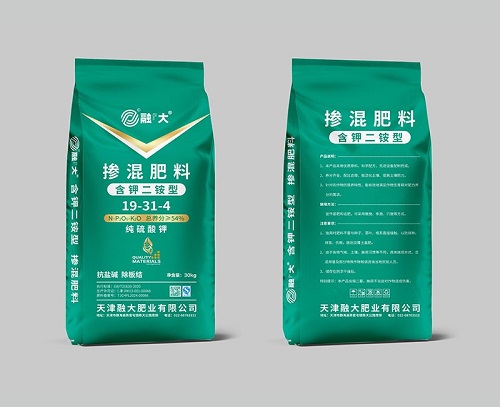
In modern precision agriculture, standard fixed-formula fertilizers often fail to meet diversified nutritional needs caused by different soil conditions, crop varieties, and growth stages. Unmatched fertilization usually leads to unbalanced nutrition, excessive fertilizer waste, and limited yield improvement. Featuring flexible formula adjustment, strong compatibility, and cost-effective performance, blended fertilizers have become a premium choice for modern agricultural planting. This article elaborates on the definition, core functions, key advantages, and scientific application tips of blended fertilizers, helping farmers apply fertilizer scientifically to reduce costs and improve crop quality and yield.
 24 2026-08
What Are the Advantages of Ordinary Blended Fertilizer (BB Fertilizer)? How to Apply It Scientifically for Field Crops, Fruits and Vegetables?
Ordinary blended fertilizer, commonly known as BB fertilizer, is physically mixed from different granular straight fertilizers without chemical granulation. Its formula can be flexibly adjusted according to soil test results and crop nutrient demand to customize NPK ratios, widely adopted as base fertilizer for large-scale agriculture. Many growers encounter particle segregation, seedling burn and improper formula selection due to misunderstanding of ordinary blended fertilizer characteristics. This article illustrates core advantages of ordinary blended fertilizer, provides standardized application plans for various crops, and summarizes key operational rules and typical mistakes.