
News
We are glad to share with you about the results of our work, company news, and give you timely developments and personnel appointment and removal conditions.
 19 2026-08
What Are the Core Advantages of Slow-Release Fertilizers Compared With Regular Fertilizers?
In modern agricultural planting, fertilizer selection plays a decisive role in crop growth, yield, and overall planting costs. Traditional regular fertilizers come with prominent drawbacks, including low nutrient utilization rates, cumbersome fertilization procedures, frequent crop disease outbreaks, and inferior agricultural product quality. As an innovative and high-efficiency fertilizer solution, slow-release fertilizers make up for all the shortcomings of conventional fertilizers through professional nutrient slow-release technology. They are widely applicable to field planting, no-till farming, soilless cultivation, and various modern planting modes. This article comprehensively analyzes the key benefits of slow-release fertilizers to help growers make informed fertilizer selection decisions.
 18 2026-08
What Taboos Should Be Avoided When Applying Magnesium Sulfate? Detailed Matching Schemes for Magnesium Fertilizer
Magnesium sulfate is a widely used fast-acting magnesium and sulfur fertilizer, which effectively improves magnesium-deficient leaf yellowing, insufficient photosynthesis and premature aging. Many growers suffer from nutrient precipitation, poor absorption and weak crop growth due to improper mixing, wrong timing and excessive dosage. This article summarizes core application taboos of magnesium sulfate, clarifies mixing rules for base application, fertigation and foliar spraying, and provides safe and practical fertilization schemes for various crops.
 17 2026-08
What Is the Complete Production Process of Blended Fertilizer?
Blended fertilizer is widely recognized in modern agriculture for its flexible formula, balanced nutrient ratio, and cost-effective performance. Many farmers and bulk buyers are curious about how high-quality blended fertilizer is manufactured in standardized automated factories, and how manufacturers ensure accurate proportioning and uniform particle quality. This article fully breaks down the complete production workflow of modern blended fertilizer production lines, covering every core procedure from raw material preparation to final product warehousing.
 15 2026-08
Calcium Magnesium Granules Supplement Secondary Nutrients, When Is the Best Application Time for Various Crops?
Calcium and magnesium are essential secondary nutrients for crop growth. Calcium magnesium granules realize simultaneous supplementation of calcium and magnesium. Magnesium facilitates photosynthesis and inhibits leaf yellowing and premature aging. Calcium strengthens cell walls and reduces physiological disorders such as fruit cracking and blossom-end rot. Many farmers only focus on NPK and neglect calcium and magnesium supply. This article clarifies the optimal application periods of calcium magnesium granules for different crops, along with practical application guidelines.
 14 2026-08
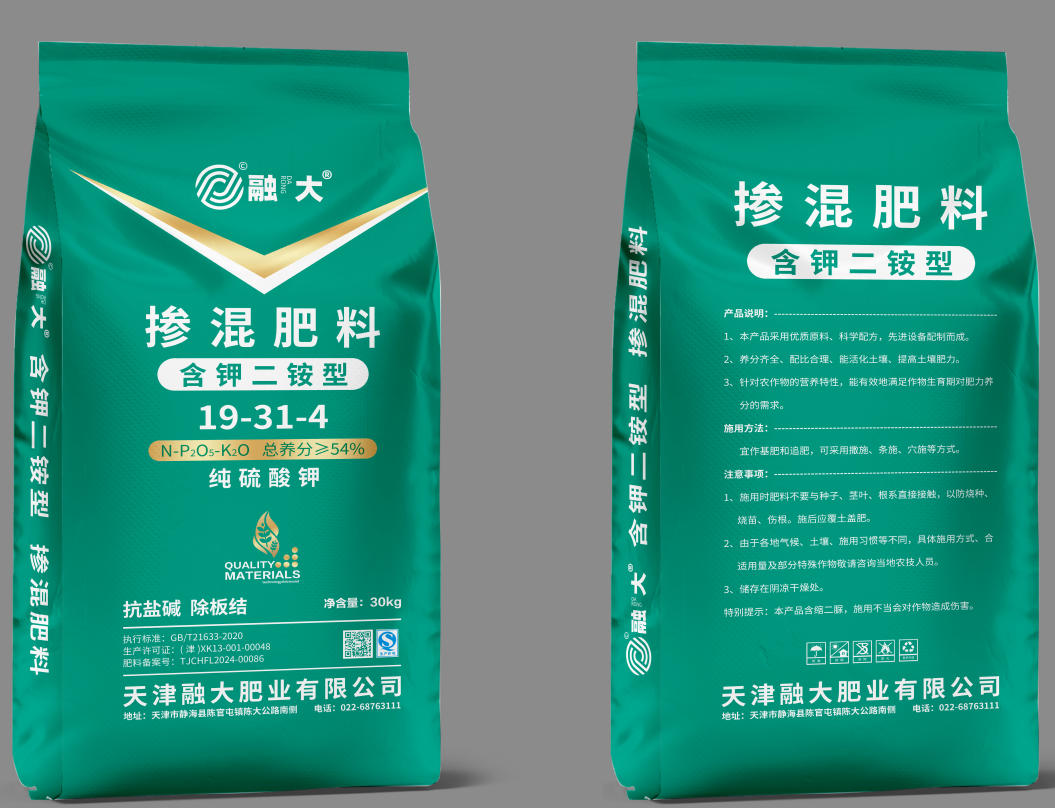
What Soils Are Suitable for Blended Fertilizer?
Bio-blended fertilizer is a new type of functional farm input that combines inorganic nutrients with beneficial microbial flora. It integrates fertilization, soil improvement, root protection, and disease suppression into one product. Featuring strong soil adaptability, it effectively improves various problematic farm soils, including acidic soil, alkaline saline land, continuous cropping soil, and infertile sandy soil. This article explains the applicable soil types, improvement mechanisms, and planting scenarios of bio-blended fertilizer, helping growers optimize soil conditions and achieve stable crop yields.
 13 2026-08
How to Formulate Fertilization Plan When Applying Bio-amino Acid Controlled-release Blended Fertilizer on Compacted Soil?
Excessive application of chemical fertilizers and continuous cropping easily lead to soil compaction, poor air permeability, restricted root penetration and blocked nutrient absorption. Bio-amino acid controlled-release blended fertilizer contains active amino acid substances and controlled-release nutrients, which can continuously supply crop nutrition and improve rhizosphere environment. Combined with characteristics of compacted soil, this article introduces supporting fertilization scheme, application skills and management key points of bio-amino acid controlled-release blended fertilizer.