

Industry News
 24 2026-07
Why Are Water-Soluble Fertilizers Popular in Modern Agriculture? Benefits and Buying Guide
With the continuous upgrading of modern agricultural planting technology, traditional granular fertilizers can no longer meet the needs of efficient, water-saving and labor-saving refined planting. Water-soluble fertilizers have become the most popular new-type fertilizers for fruits, vegetables, flowers and field crops, thanks to their fast dissolution speed, high nutrient utilization rate, flexible application methods and perfect compatibility with water and fertilizer integration systems. Many farmers frequently use water-soluble fertilizers but lack a comprehensive understanding of their core advantages, applicable scenarios and scientific selection methods. This article elaborates on the definition, core benefits and professional selection skills of water-soluble fertilizers, helping growers choose and apply fertilizers scientifically to reduce costs and increase crop yield.
 23 2026-07
What Practical Benefits Do Water-Soluble NPK Fertilizers Bring to Nutrient Supplement in Acidified Orchards?
Long-term single nitrogen fertilizer application triggers severe soil acidification in orchards, causing leaf chlorosis and fruit cracking. RONGDA high-purity water-soluble NPK fertilizers feature balanced formulas suitable for drip fertilization on acidified land. This article elaborates on how water-soluble NPK fertilizers nourish fruit trees and optimize soil conditions, providing targeted fertilization plans for citrus, apple and other fruit varieties.
 22 2026-07
What Is the Difference Between Compound Fertilizer and Blended Fertilizer? Advantages, Disadvantages and Selection Guide
Compound fertilizer and blended fertilizer are two mainstream fertilizer types widely used in modern agricultural production. Most growers struggle to distinguish their characteristics, resulting in improper fertilization, increased planting costs, uneven crop growth and low yield. These two fertilizers differ greatly in production technology, particle structure, nutrient distribution, application scenarios and fertilization effects. This article comprehensively compares their core differences, pros and cons, suitable crops and field application skills, helping farmers select and apply fertilizers scientifically according to soil conditions, crop types and planting modes.
 21 2026-07
What Practical Benefits Does Crystalled Ammonium Chloride Bring to Water-Fertilizer Integration Irrigation?
Leave a Comment Article Summary Water and fertilizer integration is core precision planting technology. Fertilizer solubility and purity directly decide irrigation equipment lifespan and fertilization effect. High-purity RONGDA crystalled ammonium chloride dissolves completely without impurities, perfectly matching drip and sprinkler systems. This article sorts its practical strengths for chlorine-tolerant crops like rice and corn.
 20 2026-07
How to Use Water-Soluble Fertilizers Correctly?
Water-soluble fertilizer is a new type of multi-component compound fertilizer widely adopted in modern agriculture. It features full water solubility, rapid absorption, high utilization rate and strong compatibility, suitable for fruits, vegetables, flowers, field crops and various planting scenarios. However, improper fertilization methods often lead to low fertilizer efficiency, nutrient loss, uneven fertilization, root burn and seedling damage. To help growers standardize fertilization operations and improve crop yield and quality, this article systematically introduces the correct application skills, core principles, flexible usage methods and key precautions for water-soluble fertilizers.
 18 2026-07
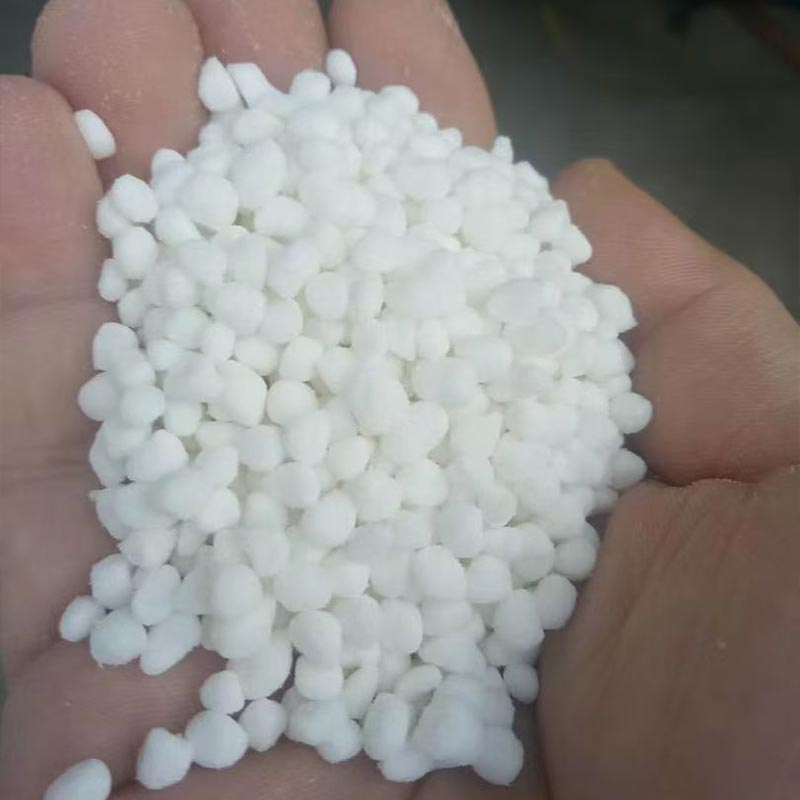
Ammonium Sulfate vs Urea: Where Are Its Advantages in Nitrogen Supply and Soil Conditioning for Acidic Soil
Article Summary Urea commonly causes severe soil acidification and poor nutrient uptake when used long-term on acidic land. Crystalline ammonium sulfate provides ammonium nitrogen and sulfur to feed crops while stabilizing soil pH. This article compares the two fertilizers and shares practical advice for growers managing acidic farmland.