
What Is Water-Soluble Fertilizer? Types, Pros, Cons, Usage and Taboos
Water-soluble fertilizer is an efficient modern farm input designed for water and fertilizer integrated agriculture. Featuring full water solubility, high absorption rate, water saving and labor saving, it is widely used in commercial crop planting and protected agriculture. Many growers confuse water-soluble fertilizer with flush fertilization and lack standardized knowledge of its types, application methods and precautions. This article systematically introduces the core knowledge of water-soluble fertilizer, helping farmers apply fertilizer scientifically to improve crop quality and yield.

Table of Contents
1. Definition and Basic Characteristics of Water-Soluble Fertilizer
2. Key Differences Between Water-Soluble Fertilizer and Flush Fertilization
3. Main Types and Industry Standards of Water-Soluble Fertilizer
4. Advantages and Disadvantages of Water-Soluble Fertilizer
5. Scientific Application Methods and Fertilization Taboos
Definition and Basic Characteristics of Water-Soluble Fertilizer
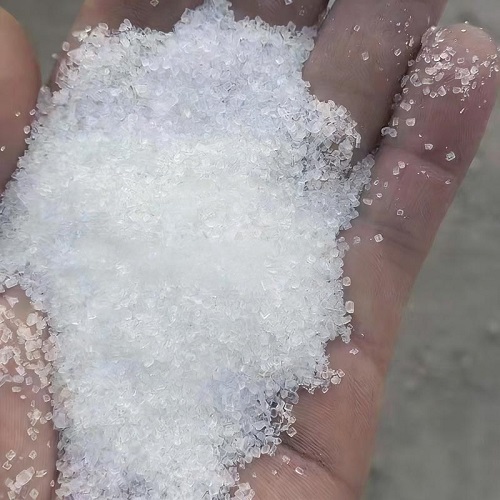
Water-soluble fertilizer (WSF) is a kind of multi-element compound fertilizer that can be completely dissolved in water. It is available in solid and liquid forms. After dilution with water, it can be applied for irrigation fertilization, foliar spraying, soilless cultivation, seed soaking and root dipping, covering almost all modern planting scenarios.
Compared with traditional compound fertilizers, water-soluble fertilizer dissolves rapidly without sediment or residue. It can be absorbed directly by crop roots and leaves, greatly improving nutrient utilization efficiency and quickly supplementing nutrients during the vigorous growth stage of crops. Combined with drip irrigation and micro-sprinkler irrigation systems, it realizes water and fertilizer integration, effectively saving water, fertilizer and labor costs. It has become an essential fertilizer for modern agricultural efficiency improvement and income growth, especially in regions with water resource shortages.
Key Differences Between Water-Soluble Fertilizer and Flush Fertilization
Many farmers and distributors confuse water-soluble fertilizer with flush fertilization, causing misunderstandings in purchasing and application. In fact, the two concepts are essentially different and cannot be equated.
Flush fertilization is a common topdressing method rather than a specific fertilizer product. It refers to dissolving quick-acting solid fertilizers in water and applying them through irrigation. Various irrigation methods such as furrow irrigation, well irrigation, drip irrigation and sprinkler irrigation are applicable. Traditional compound fertilizer and even organic manure can be used for flush fertilization after water dilution.
In contrast, water-soluble fertilizer is an independent and standardized fertilizer product with strict production standards. It must be fully soluble, free of impurities, and compliant with heavy metal limits. The core distinction is clear: all water-soluble fertilizers can be used for flush application, but fertilizers used for flushing are not necessarily standard water-soluble fertilizers.
Main Types and Industry Standards of Water-Soluble Fertilizer
According to nutrient composition and functions, water-soluble fertilizers are divided into six mainstream categories: macro-element, medium-element, trace-element, amino acid-based, humic acid-based, and special organic water-soluble fertilizers. Growers can combine different formulas to meet the full-cycle nutrient requirements of various crops. In 2020, China adjusted seven types of fertilizer management from registration approval to filing management, further standardizing the production and market access standards of water-soluble fertilizers.
Amino acid water-soluble fertilizer adopts free amino acids as the core raw material and is compounded with medium and trace elements, complying with the NY1429-2010 standard. It can activate crop vitality and enhance stress resistance. Humic acid water-soluble fertilizer follows the NY1106-2010 industry standard. Extracted from natural humic acid raw materials, it improves soil structure, promotes root growth and increases nutrient availability. Special organic water-soluble fertilizers represented by alginic acid and chitin are widely used for high-value cash crops to improve quality and enhance crop resistance.
Advantages and Disadvantages of Water-Soluble Fertilizer
Water-soluble fertilizer has obvious competitive advantages over traditional chemical fertilizers in modern precision agriculture, while it also has certain limitations in practical application.
Its prominent advantages include full water solubility and ultra-high absorption efficiency, with nutrient utilization rate reaching 80%-90%, 2 to 3 times higher than conventional fertilizers. It perfectly matches water-fertilizer integration systems, saving water, fertilizer and labor resources. With uniform fertilization and adjustable concentration, it avoids seedling burning and soil damage. The quick-acting formula can effectively solve crop nutrient deficiency and weak growth problems, supporting flexible formula adjustment according to crop growth stages.
In terms of disadvantages, high-quality water-soluble fertilizer has higher production costs and retail prices, limiting large-scale promotion in low-profit field crop planting. In addition, due to its strong quick-acting property, nutrients cannot be fixed in soil for a long time. Excessive single fertilization will lead to nutrient leaching, reducing economic benefits and causing potential water pollution.
Scientific Application Methods and Fertilization Taboos
Water-soluble fertilizer features flexible and diverse application methods. The three mainstream usage methods are drip or sprinkler irrigation application, soil irrigation and foliar spraying, suitable for large-scale farms, greenhouse planting and seedling cultivation scenarios.
The core fertilization principles are small amount and multiple times, ready-to-use after preparation. Avoid fertilization at high-temperature noon or on rainy and foggy days. For drip irrigation systems, flush clean water before and after fertilization to prevent pipeline and dripper blockage caused by residual fertilizer liquid. It is not allowed to mix acidic and alkaline agrochemicals. Stop mixing if flocculation and precipitation occur to prevent crop damage.
Never apply stock solution directly; secondary dilution is mandatory to ensure uniform fertilization. Strictly control the fertilization dosage according to crop conditions. Seal and store unused fertilizer in a cool and dry environment. Slight caking does not affect fertilizer efficiency. Blind and excessive application should be avoided in all planting scenarios.
Summary
Water-soluble fertilizer is a core high-efficiency input for modern precision agriculture. Different from the simple flush fertilization method, it is a standardized compound fertilizer with high nutrient utilization. With rich formulas and wide adaptability, it supports water-fertilizer integrated planting, saving resources and stably improving crop yield and quality. Although it has higher market prices and short soil retention time, standardized and scientific application can effectively avoid defects, maximize fertilizer efficiency, and realize efficient and sustainable agricultural planting.
FAQ
Q1: Are water-soluble fertilizer and flush fertilization the same?
A: Definitely not. Water-soluble fertilizer is a formal standardized fertilizer product with strict industry standards. Flush fertilization is only a common irrigation and fertilization method. All water-soluble fertilizers can be used for flushing, but flushable fertilizers are not necessarily standard water-soluble fertilizers.
Q2: Why is water-soluble fertilizer better than ordinary compound fertilizer?
A: Water-soluble fertilizer dissolves completely without residues and can be absorbed by both roots and leaves. It features higher nutrient utilization, faster fertilizer effect and more uniform fertilization performance. It avoids nutrient waste and soil pollution, fully adapting to modern precision agricultural planting.
Q3: Can water-soluble fertilizer be mixed with all pesticides?
A: No. It can only be mixed with non-alkaline pesticides. Mixing acid and alkaline products will cause precipitation, reduce fertilizer and pesticide efficiency, block irrigation pipelines and cause crop leaf damage. Separate application is always recommended.
Q4: Can caked water-soluble fertilizer still be used normally?
A: Yes. Slight caking is a normal physical change caused by moisture absorption during storage, which will not change the internal nutrient composition and fertilizer efficiency. It can be used normally after breaking and diluting.
Q5: Why apply water-soluble fertilizer with small amount and multiple times?
A: Water-soluble fertilizer has strong quick-acting performance and cannot stay in soil for a long time. One-time excessive fertilization will cause nutrient loss and environmental pollution. Small amount and multiple-time application conforms to crop nutrient absorption rules and greatly improves fertilizer utilization efficiency.
If you are looking for a reliable high-quality water-soluble fertilizer supplier with stable product quality and professional agricultural technical support, Tianjin Rongda Fertilizer Co., Ltd. is always ready to assist you. Contact us today to discover our professional water-soluble fertilizer solutions and boost your agricultural productivity and crop yields.
Related News
- How Do Controlled-Release Curves Match Crop Demand?
- Can Magnesium Sulfate Be Used in Saline-Alkali Soil? What Are the Risks of Long-Term Application?
- How Do You Turn a Soil Test into a Blend Sheet?
- How Does Applying Magnesium Sulfate After Grape Harvest Help Bud Burst in the Next Year?
- Which Magnesium Sulfate Fits Your Ground?
- Can Foliar Spraying Magnesium Sulfate During Fruit Expansion Improve Fruit Sweetness?
Leave me a message