
Why Do Modern Crops Need More Sulfur Than NPK Provides?
Modern fertilizer programs deliver nitrogen, phosphorus and potassium with precision, yet a fourth nutrient has quietly slipped into deficiency across the world's cropland: sulfur. Cleaner air means less free sulfur deposition, and higher yields mean more sulfur leaves the field in every harvest. This article explains why agricultural ammonium sulfate has become the most practical answer, and how to use it without disturbing your nitrogen balance.

Contents
- Why Did Sulfur Deficiency Appear So Suddenly?
- What Makes Ammonium Sulfate the Most Practical Sulfur Source?
- Where Does It Fit, and Where Should You Be Careful?
- Application Snapshot for Common Crops
- Frequently Asked Questions
- Conclusion
Why Did Sulfur Deficiency Appear So Suddenly?
For decades, growers never planned for sulfur. Rain and industrial fallout delivered it free of charge, and extensive reports from agricultural agencies across Europe, North America and Asia now document the same trend: atmospheric sulfur deposition has fallen sharply, while harvest removal has kept climbing. The result is a widening gap that standard NPK blends were never designed to fill.
The gap shows up first where you would expect: sandy soils that cannot hold sulfur, high-rainfall regions where sulfate leaches away each season, and intensive vegetable and grain systems that remove 20-40 kg of sulfur per hectare every year in the harvested crop alone.
- Oilseed rape, alfalfa and corn respond visibly to sulfur; so do onions, garlic and brassicas that build flavor compounds from it.
- Young leaves turn pale yellow, much like nitrogen deficiency but starting from the top of the plant, because sulfur is only mildly mobile inside the crop.
- The cost of the gap is silent: trials on responsive crops commonly report measurable yield and protein gains when the sulfur supply is corrected.
What Makes Ammonium Sulfate the Most Practical Sulfur Source?
Among the fertilizer materials that carry sulfur, ammonium sulfate stands out on three practical counts. It carries sulfur fully in sulfate form, which roots absorb immediately. It supplies nitrogen in ammonium form, which resists leaching better than nitrate on sandy ground. And it is one of the most cost-effective sources of both nutrients per unit of nutrient delivered, with decades of field performance behind it.
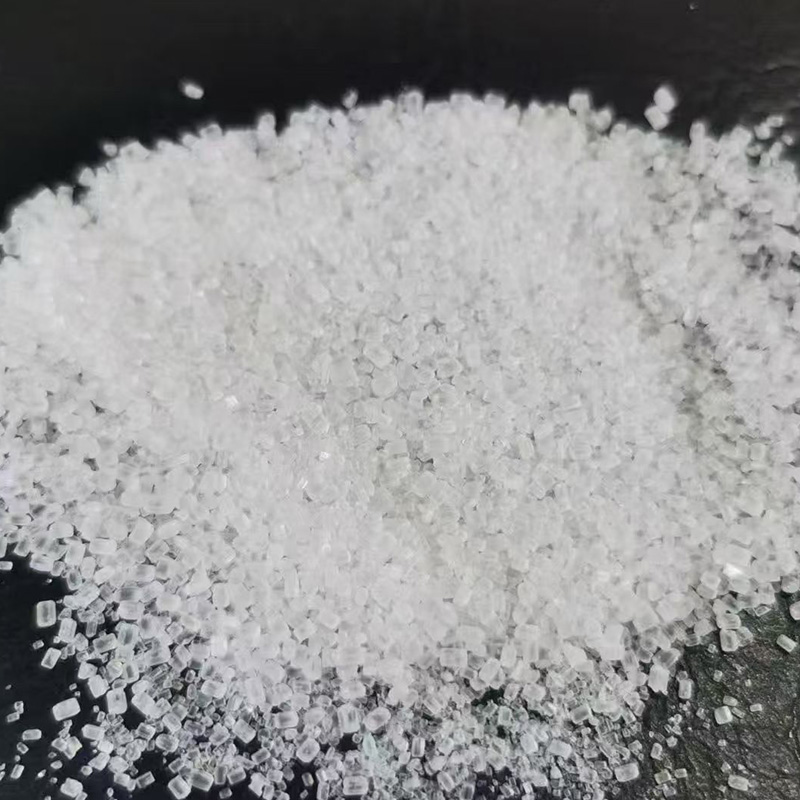
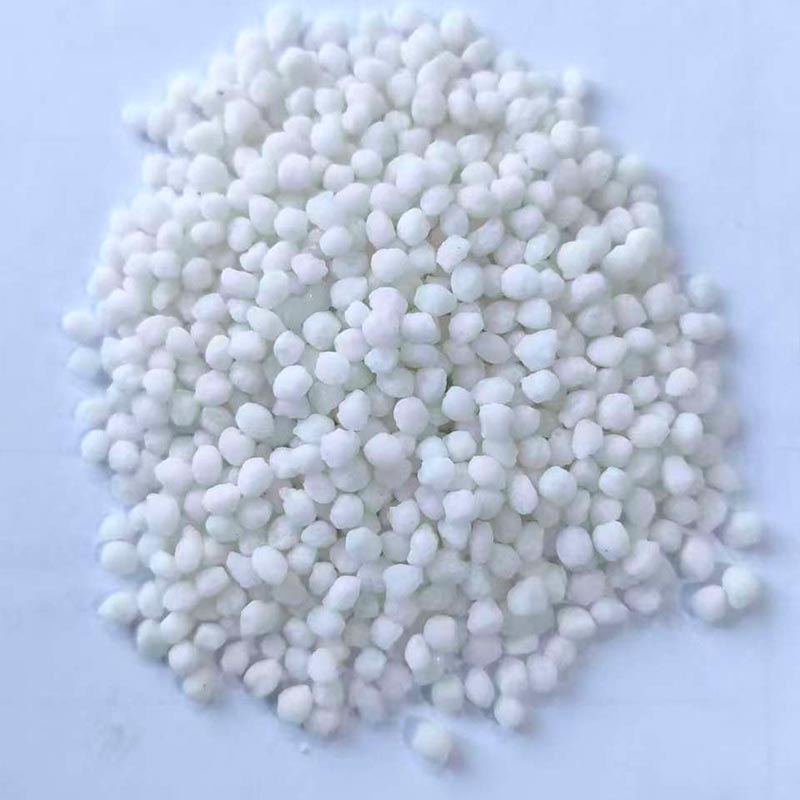
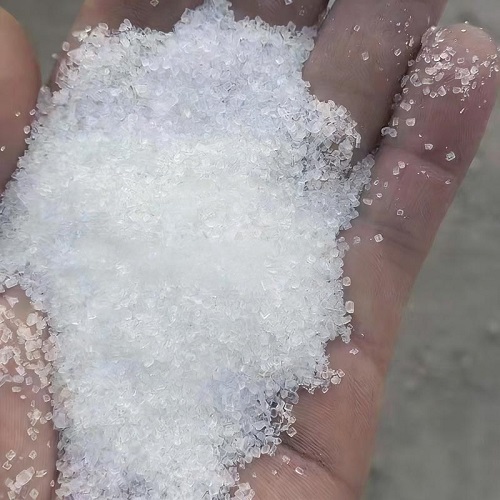
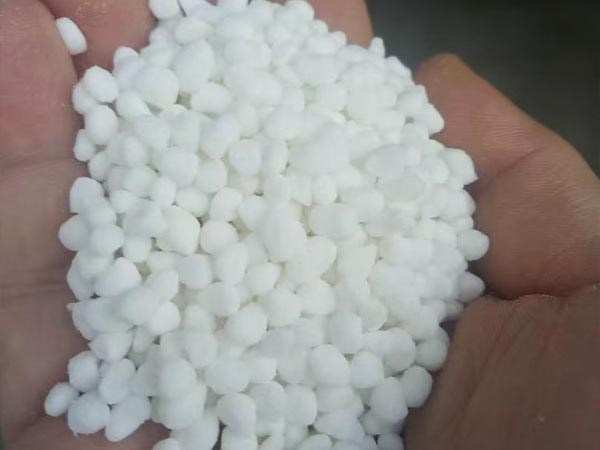
The classic specification - 21% N and 24% S in white crystalline or granular form - suits both straight application and blending. For a practical product example, agricultural ammonium sulfate is supplied as free-flowing crystalline material, packed in 25/50 kg woven bags or 500/1000 kg jumbo bags depending on the destination market.
- Fully sulfate sulfur: available to the crop from the first week, no oxidation wait.
- Ammonium nitrogen: sticks to clay and organic matter instead of washing straight through sand.
- Physiologically acidic reaction: a useful side benefit on alkaline and calcareous soils, where it also improves micronutrient availability.
Where Does It Fit, and Where Should You Be Careful?
Ammonium sulfate fits naturally into programs that need sulfur alongside a steady nitrogen supply: top dressing for cereals and pastures, side dressing for vegetables, and spring applications for oilseed rape. On alkaline soils its acidifying effect is an asset; on already acidic soils, pair it with a liming plan.
Two cautions keep the results positive. First, do not stack all nitrogen as ammonium at once - rotate or blend with other nitrogen sources so the ammonium share stays balanced. Second, in hot soils, nitrification converts ammonium to nitrate within weeks, so split the largest applications just as you would with any nitrogen fertilizer.
Application Snapshot for Common Crops
The table below offers starting-point guidance. Local soil tests and yield targets should always take precedence over generic rates.
|
Crop |
Typical S removal |
Ammonium sulfate guidance |
|
Cereals (wheat, maize) |
20-30 kg S/ha per year |
100-200 kg/ha, split between tillering and stem extension |
|
Oilseed rape / canola |
40-60 kg S/ha per year |
200-300 kg/ha, split at rosette and bud stage |
|
Brassicas, onions, garlic |
30-50 kg S/ha per year |
150-250 kg/ha in 2-3 split doses |
|
Pastures and forage |
15-25 kg S/ha per year |
75-125 kg/ha per season or per intensive cut |
Frequently Asked Questions
Q1: Can ammonium sulfate be mixed with other fertilizers?
Yes. It blends well with most straight and compound fertilizers. Avoid mixing it with alkaline materials such as lime or calcium cyanamide in the same spreader hopper, and keep it away from strong alkali pesticides in tank mixes.
Q2: Is it suitable for chloride-sensitive crops like tobacco and potato?
Yes - unlike ammonium chloride, ammonium sulfate carries no chloride, which makes it a preferred nitrogen-plus-sulfur source for tobacco, potatoes, grapes and other chloride-sensitive crops.
Q3: How is the product packed for export?
Standard export packing is 25 kg or 50 kg woven bags with inner lining, or 500/1000 kg jumbo bags, palletized and containerized. Bags can be printed with the customer's brand for private-label programs.
Q4: Will it make my soil too acidic?
It is mildly acidifying with continued heavy use. On alkaline and calcareous soils this is usually beneficial. On acidic soils, monitor pH and maintain your normal liming program to keep the balance.
Conclusion
Sulfur has moved from a free gift of the atmosphere to a nutrient you must budget. Ammonium sulfate answers that budget with immediately available sulfate sulfur, leaching-resistant ammonium nitrogen and a cost structure that scales from smallholder plots to thousand-hectare farms. Match the source to the soil, respect the nitrogen balance, and the fourth nutrient stops being the hidden limit on your yield.
If you are looking for a reliable supplier of ammonium sulphate, offering consistent quality and professional support, Tianjin Rongda Fertilizer Co., Ltd. is ready to help. Contact us today to learn how our fertilizer solutions can improve your agricultural productivity.
Related News
- How Do Water-Soluble Fertilizers Feed Drip-Irrigated Crops?
- What Can Calcium Magnesium Granules Do for Degraded and Acid Soils?
- What Are the Top 10 Signs of Magnesium Deficiency in Crops?
- How to Apply Magnesium Sulfate to Orchards, Vegetables & Field Crops?
- Is Calcium Ammonium Nitrate a Safer Nitrogen for Stressed Soils?
- Why Is Magnesium Sulfate the Fourth Major Nutrient for High Yields?
Leave me a message