
Why Does Mixing Ammonium Sulfate With Alkaline Fertilizers Fail? What Are The Matching Principles?
Many growers tend to mix multiple fertilizers for one-time field application. However, mixing Ammonium Sulfate directly with alkaline fertilizers will cause nutrient loss and fertilizer failure, raising planting costs unnecessarily. Combined with years of field practice from Rongda, this article explains the underlying chemical mechanism of failed mixing between Ammonium Sulfate and alkaline fertilizers. This article sorts out the matching principles of Ammonium Sulfate to help growers avoid fertilization mistakes and ensure efficient absorption of nitrogen and sulfur nutrients.

Table of Contents
1. Core Reason for Failure When Mixing Ammonium Sulfate With Alkaline Fertilizers
2. Common Alkaline Fertilizers That Cannot Be Mixed With Ammonium Sulfate
3. Safe Fertilizer Matching Plans for Ammonium Sulfate
4. Practical Field Application Tips for Ammonium Sulfate
5. Reference Standards for Purchasing Ammonium Sulfate
1. Core Reason for Failure When Mixing Ammonium Sulfate With Alkaline Fertilizers
Ammonium Sulfate is a physiologically acidic nitrogen fertilizer that supplies both nitrogen and sulfur elements for crops. When Ammonium Sulfate contacts alkaline fertilizers, chemical reactions take place. Ammonium ions inside Ammonium Sulfate convert into ammonia gas and escape into the air.
Once ammonia volatilizes, the key nitrogen nutrient carried by Ammonium Sulfate suffers massive loss, and fertilizer efficiency drops sharply, which is the fertilizer failure observed by growers. Even after Ammonium Sulfate is applied into soil, direct contact between Ammonium Sulfate and alkaline fertilizers will still trigger reactions and waste nutrients.
2. Common Alkaline Fertilizers That Cannot Be Mixed With Ammonium Sulfate
Typical alkaline fertilizers include quicklime, slaked lime, calcium magnesium phosphate fertilizer and plant ash. These materials have high pH values and must not be mixed with Ammonium Sulfate for broadcasting or flushing application.
Some farmers spread Ammonium Sulfate and plant ash together during soil preparation. This seemingly time-saving operation quickly consumes the ammonium nitrogen in Ammonium Sulfate. Even without instant mixing, applying these two fertilizers on the same plot within a short period will risk nutrient loss.
3. Safe Fertilizer Matching Plans for Ammonium Sulfate
Ammonium Sulfate can be blended with most acidic and neutral fertilizers. Proper matching can further improve fertilizer efficiency. Mixing Ammonium Sulfate with Magnesium Sulfate supplies nitrogen, sulfur and magnesium for crops at the same time, suitable for orchards and cash crops.
Combining Ammonium Sulfate with water-soluble fertilizer works for topdressing in drip irrigation systems. This combination quickly corrects leaf yellowing caused by nitrogen and sulfur deficiency. Ammonium Sulfate mixed with monoammonium phosphate provides coordinated nitrogen and phosphorus nutrition for topdressing field crops in growing seasons.
Carry out small-scale tests before mixing, check fertilizer dissolving status and prevent sediment from clogging drip irrigation pipelines.
4. Practical Field Application Tips for Ammonium Sulfate
Apply Ammonium Sulfate when soil moisture is appropriate. Moderate soil moisture reduces the risk of ammonia volatilization. If alkaline soil amendments are required for the field, separate the application time of alkaline materials and Ammonium Sulfate by at least 7 to 10 days.
Ammonium Sulfate performs well in saline-alkali land and can adjust local soil pH. Continuous heavy and single use of Ammonium Sulfate will gradually acidify soil. Test soil pH regularly and use calcium-magnesium granules for soil improvement.
Control the concentration strictly when using Ammonium Sulfate for foliar spraying. Excessive concentration burns crop leaves and causes fertilizer damage.
5. Reference Standards for Purchasing Ammonium Sulfate
High-quality Ammonium Sulfate contains low impurities and shows good water solubility. High-quality Ammonium Sulfate maintains stable performance for broadcasting and drip irrigation. Rongda supplies premium Ammonium Sulfate with stable nitrogen content for field crops, fruits, vegetables and sulfur-loving oil crops.
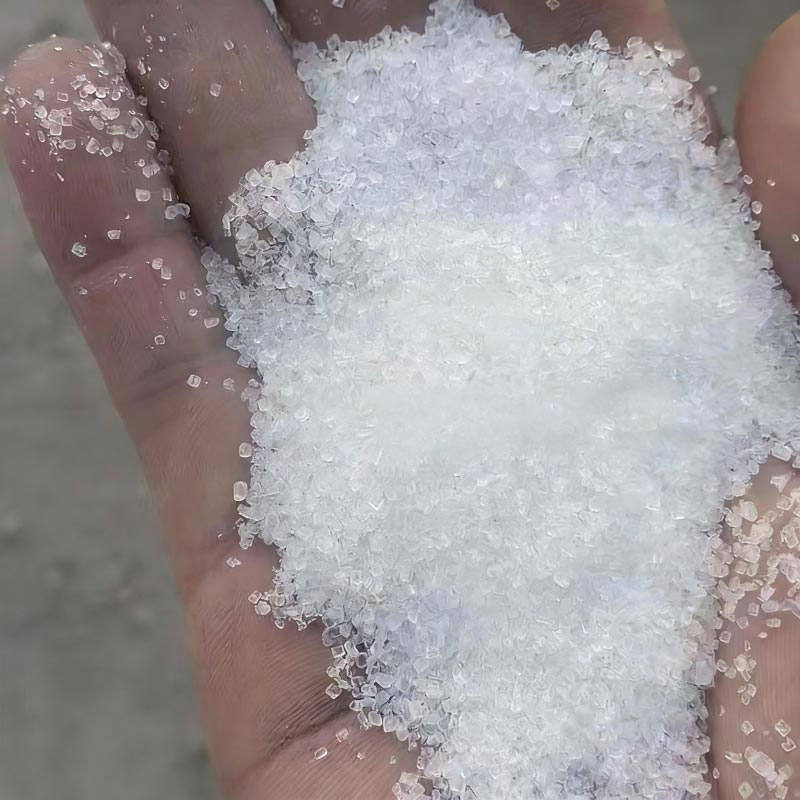
Focus on nitrogen content, moisture and free acid indicators when purchasing Ammonium Sulfate. Qualified Ammonium Sulfate has uniform crystals and little residue after dissolution. Qualified Ammonium Sulfate fits various water and fertilizer integration scenarios.
Related News
- How Do Water-Soluble Fertilizers Feed Drip-Irrigated Crops?
- What Can Calcium Magnesium Granules Do for Degraded and Acid Soils?
- What Are the Top 10 Signs of Magnesium Deficiency in Crops?
- Why Do Modern Crops Need More Sulfur Than NPK Provides?
- How to Apply Magnesium Sulfate to Orchards, Vegetables & Field Crops?
- Is Calcium Ammonium Nitrate a Safer Nitrogen for Stressed Soils?
Leave me a message